A tête-à-tête With Pandit Dev Bansraj

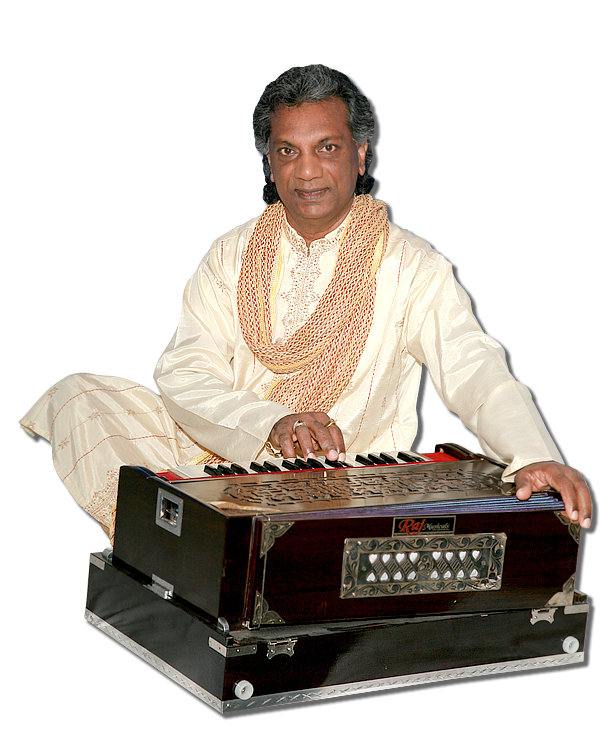
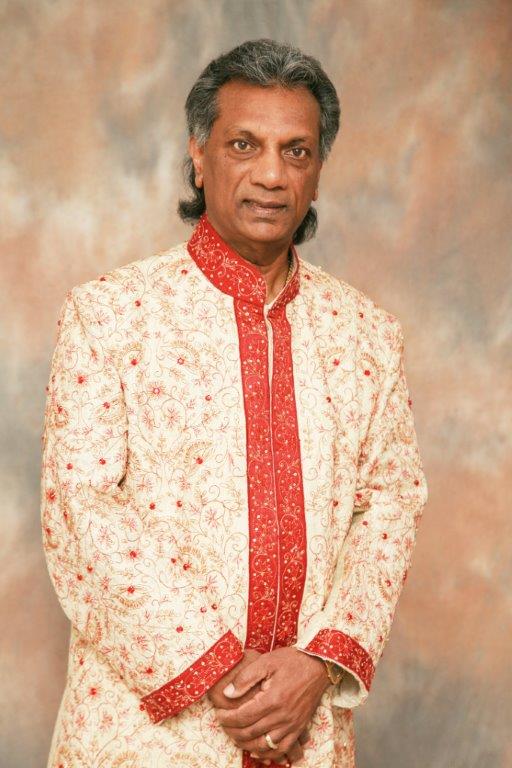
Pandit Dev Bansraj is one of the superlative vocalists of Indian musical world living in Canada whose preeminent music as a performer and teacher helped him to nurture a number of students around the world and made him ‘Sangeetacharya’.
Strings N Steps
Inside Words with Sangeeta Majumder for Strings N Steps Magazine
Curated by Priyadarshi Banerjee
Photography by Sunando Das
Indian classical music and dance are that fragrance from an incense stick that engrosses us slowly keeping alive the aroma for a long long time. It is also obvious that definitions would vary from people to people much due to – how they perceive this art form – as a vocation or avocation. India is travelling through massive alterations in the field of classical music-dance and it might lead to evolution or beldam. Innovation has diminished the compartmentalisation of various music-dance forms which might not be suitable if we consider the speciality of their origin. Still let us consider that currently there is a boom of Indian classical music in the country. In the ongoing trends there are few who have been clear in their devotion towards the real virtues of Indian classical music. It’s though provoking to envisage a vivid artist but it’s always a pleasure to hear the story- through which they have shown exemplary talent, grace and artistic panache.
Dev Bansraj Ramkissoon was born in 1951, at Tarouba Village, Marabella, Trinidad, West Indies. In 1967 at the tender age of 17, he made a name for himself in Classical Indian Singing by winning the Independence Celebration Championship Indian Singing Competition in Trinidad and Tobago. He has received his early training from Ustad Jhagroo Kawal. In the Year 1968 he was awarded a Scholarship to study music in India. He is the brother of the well-known Indian Singer and Musician Hansraj Ramkissoon. Professor Ramkissoon has been performing over the years in the U.K., Canada, U.S.A., Trinidad, Venezuela, Suriname and Guyana to name a few. Dev has done numerous recordings over the years, they include Indian Classical Singing, Bhajans and Ghazals. Presently, he is a well-known Music Instructor residing in Brampton, Ontario, Canada. For the many fans of Dev Bansraj Ramkissoon worldwide, we have added a few Video Samples for your enjoyment. (Copyright Hindisongstt 2016)
Q. Can you put into words your own Personality and Persona
It has always been difficult for me to answer questions about myself.
But there are some words that come to mind when I am confronted with this question: humble, passionate, confident,
focused, perfectionist. Perhaps I am all those things, but I know I am much more.
Even though I mostly see myself as being somewhat strict, I do have a humourous side as well.
I like to think that my persona is something that projects my dedication to attaining the standards of music which I had set out to achieve so many years ago and which will always keep me occupied in seeking more knowledge so I can remain at the forefront of Indian Music.
Q. You are one of the leading Indian classical musicians in Canada now. Did you program things this way?
Not at all. I believe that whatever has attributed to my position as a leading Classical Musician is mostly due to my humble approach to music. I do not claim to be anything other than an instrument of music. I let the people decide based on the talent that God has blessed me with.
Q. There are many changes occurring in India. Yes, indeed. Parampara, in Sanskrit, means tradition, which undergoes uninterrupted change. In this context, what do you think, where does Indian Classical music stand?
Parampara is a very sacred bond between Guru and Disciple.
I believe that the foundation of the Guru-Disciple relationship should remain and be cherished. It is apparent that the traditional way of learning is becoming overshadowed by less “learned ways”, but I can see that Indian Classical Music can withstand this changing world. In my opinion, in order to maintain and strengthen this tradition, it is very important that those learning from a Guru understand the value of this relationship.
Q. How would you describe your music? According to you which part of your rendition makes you different from others. does your style bear any innovation?
My music is like the air I breathe, It is always around me. If I am not singing it I am thinking it.
I am different in many ways from others, notably for my melodious voice and command of my pitch. In my rendition of Ghazals and Bhajans I apply classical variations (Alaps and Taans) to beautify my performances.
Q. Will you throw light on your Guru’s method of teaching? Is it different from yours? If yes-How? If no-why?
My Gurus (the late Pt. Dilip Chander Vedi -Vocal and Pt. Debu Chaudhuri – Sitar) method of teaching for me was very strict yet nurturing. No, there is no difference from my teaching because I have learnt and accomplished so much from both my Gurus, and this is why I apply the same method and impart the same knowledge on my students as a Guru myself.
Q. Do you think that there are separate methods or techniques in vocal music for man and woman?
To my knowledge there is no separate method because they also utilize the same breath techniques.
But, the technique in which the Guru teaches the male and female differs somewhat. Men and women have different pitch levels and sounds differently.
Q. Does your heart still miss a beat before concerts after so many years of experience?
No, it does not and never did.
Q. How do you rate your success?
In the eyes of God, I am where he wants me to be.
Q. There is a popular opinion that the Younger generation isn’t much interested in classical music- dance forms. Do you agree? How would you justify your opinion?
I would have to say that I don’t completely agree.
It is apparent that many youngsters would much rather spend their time engaged in other activities, but there is still a significant number of those who respect and want to learn Classical music.
Not to mention, there is a strong lineage of Classical Musicians whose children and grand children that are continuing to follow in their foot-steps.
Q. Can you share your most memorable onstage moment?
The most memorable onstage moment that is etched in my memory is in 2009 when I was awarded the 1 st . place winner in an International Classical Singing Competition.
Q. What is your favorite idea of Holidaying? Do you think it is necessary to have leisure-voids while working?
My favorite idea of holidaying is travelling to different countries and visiting their land marks. It is absolutely necessary to have leisure while working so you can unwind and regroup. It also helps the inspiration to flow.
Q. If you were given the chance to live again, how would you want it to be?
To be the best Vocal and Instrumental Musician ever. (a legend)